Pre-prepared handouts, notes, or outlines of the content they are about to learn (also known as priming).
- Will “help students to identify the key points of what they are about to learn, but it also models how to organize and keep track of the information in a systematic way” (Hodgkinson & Parks, 2016, p. 212).
- Will allow a student who would struggle with taking notes and listening to a lecture simultaneously the opportunity to engage and participate in the lecture in a more stress-free manner.
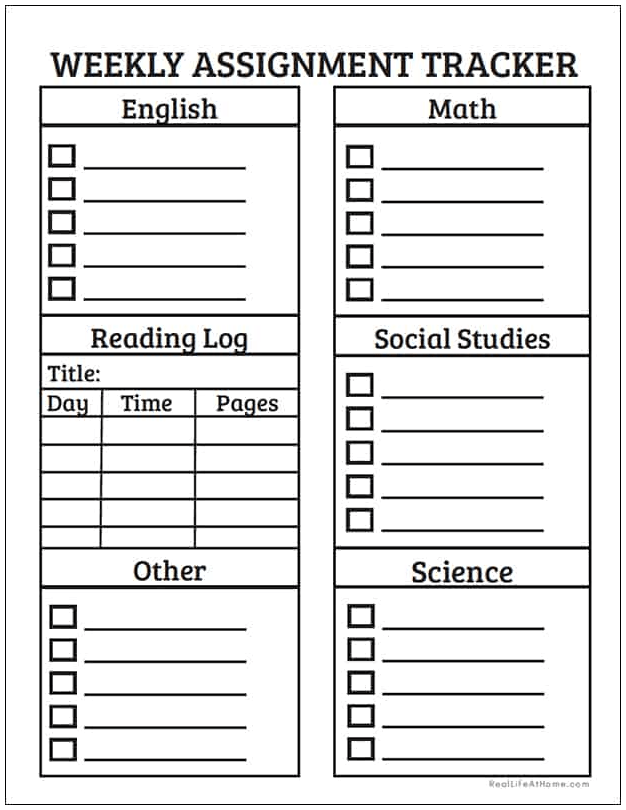
Checklists containing steps to complete a task or assignment can be created by the student or the teacher.
- Students will use the checklist to manage their work, increasing independence, and on-task behavior.
- “If a student knows how to perform tasks and the teacher observes that those performances occur as desired intermittently, then self-management is a good match as an intervention because it teaches the student to control or manage more consistent performances of the targeted behavior” (King-Sears, 2008, p. 26).
Daily planners are a useful strategy to help students who struggle with remembering what they need to do for homework.
- For students who are not completing and turning in homework, daily planner checks can be implemented.
- For added support at home, parent signatures can be required (Hodgkinson & Parks, 2016, p. 211).
Weekly locker checks
- Useful for students who lose their homework often.
- At first, the teacher may need to be very involved with the process of going through the student’s locker, going through materials, and organizing.
- The purpose of this is to locate missing assignments and increase organizational skills that will assist in task completion (Hodgkinson and Parks, 2016, p. 211).
Schedule routine organization time into the school day.
More Resources!
 Executive Function