Identifying when a student is struggling with executive function processing exhibiting in the classroom is the first step to determining appropriate strategies for optimal learning. Knowing a student’s executive function skills can predict academic achievement and are extremely important for academic success (Zelazo, 2016, p. 1).
How are executive function deficits identified?
Assessments of Executive Functions. There are several tools available to evaluate executive function but testing for executive function deficits can be difficult and must be comprehensive. “A broad approach to the assessment of executive function processes is critical and should include a detailed developmental and educational history, questionnaires completed by parents and teachers, behavior rating scales, standardized performance-based tests, and theoretically grounded process measures” (Meltzer et al., 2018, p. 132).
Behavioral Inventories
- Behavior Rating Inventory of Executive Function (BRIEF)
- Published by PAR
- A “questionnaire for parents and teachers of school-age children, and provides a profile of executive function behaviors at home, school, and social environments” (Anderson, 2002, p. 75)
- Available for ages 2 years to 18 years
- Preschool: 2 years to 5 years 11 months (separate version)
- School-age: 5 years to 18 years
- Parent, Teacher, and Self-Report forms

- Behavior Assessment System for Children (BASC)
- Published by Pearson
- Assesses behaviors and emotions of children and adolescents
- Available for ages 2 years to 21 years
- Preschool: 2 years to 5 years
- Child: 6 years to 11 years
- Adolescent: 12 years to 21 years
- Parent, Teacher, and Self-Report forms
- Parent Rating Scale (PRS)
- Teacher Report Scale (TRs)
- Self-Report of Personality (SRP) for ages 6 years to 21 years

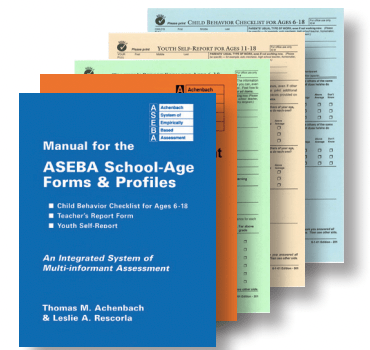
- Achenbach System of Empirically Based Assessment (ASEBA)
- Assesses adaptive and maladaptive functioning
- Available for ages 1.5 years to 18 years (versions available up to 90+)
- Preschool: 1.5 years to 5 years
- School-age: 6 years to 18 years
- Parent, Teacher, and Self-Report forms
- Parent Form – Child Behavior Checklist (CBLC)
- Teacher Report Form (TRF)
- Youth Self-Report (YSR) for ages 11 years to 18 years
Formal Assessments
Observable Behaviors. Teacher observation is “invaluable when it comes to identifying strengths and weaknesses in executive function” (Hodgkinson & Parks, 2016, p. 209).
- Some behaviors to look for in the classroom include:
- not bringing required materials to class
- losing assignments
- not submitting completed assignments
- struggling to learn new tasks
- trouble transitioning
- poor time management
- poor understanding of breaking apart large assignments into smaller tasks
- rushed work
- frustration when things become difficult
- poor impulse control
- making decisions based on emotion
- Executive function skills are not limited in application to task completion; they are also used in acceptable and successful social interactions.
- Aside from those with executive function appearing lazy or unmotivated, indicators also include socially inappropriate jokes, comments, or questions.
- Often, rigidity and resistance to change are observed, as well as an inability to learn from mistakes.
- These traits tend to make it difficult for those who struggle with executive function processing to form meaningful and lasting interpersonal relationships (Anderson, 2002, p. 72).
 Executive Function