Self-monitoring is when students can find and fix their own mistakes.
- According to Amato-Zech et al. (2006), self-monitoring is a two-step process.
- Step one is self-observation; the student will check in with themselves to determine if they are doing what they are supposed to be doing.
- Step two is self-recording; the student will record the results of their self-observation (Amato-Zech et al., 2006, p. 211).
- Self-monitoring in the classroom can be done as a whole class or on an individual level.
- For the whole class, the teacher sets up an audio cue (like a bell or chime) that alerts students it is time to self-observe.
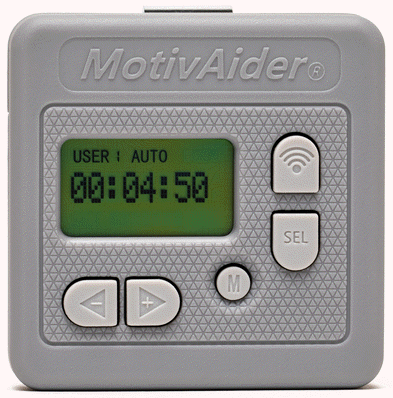
- On an individual level, students can wear a device such as the MotivAider that vibrates at set intervals alerting the student that it is time to self-observe.
- “Students with and without disabilities can learn to use self-monitoring to regulate their own behavior and enhance independent activity”, therefore self-monitoring is a very appealing strategy to use in the classroom (Amato-Zech, Hoff & Doepke, 2006, p. 211).
- Moore et al. (2013), tested the MotivAider among typically developing students and found the self-monitoring device significantly improved on-task performance for all students participating in the study (p. 219).
- Self-Monitoring Resources
Posted Classroom Schedules

Virtual Calendars and Schedules
Timers
- Auditory Timers
- Ring a bell or chime at a set time prior to transitions
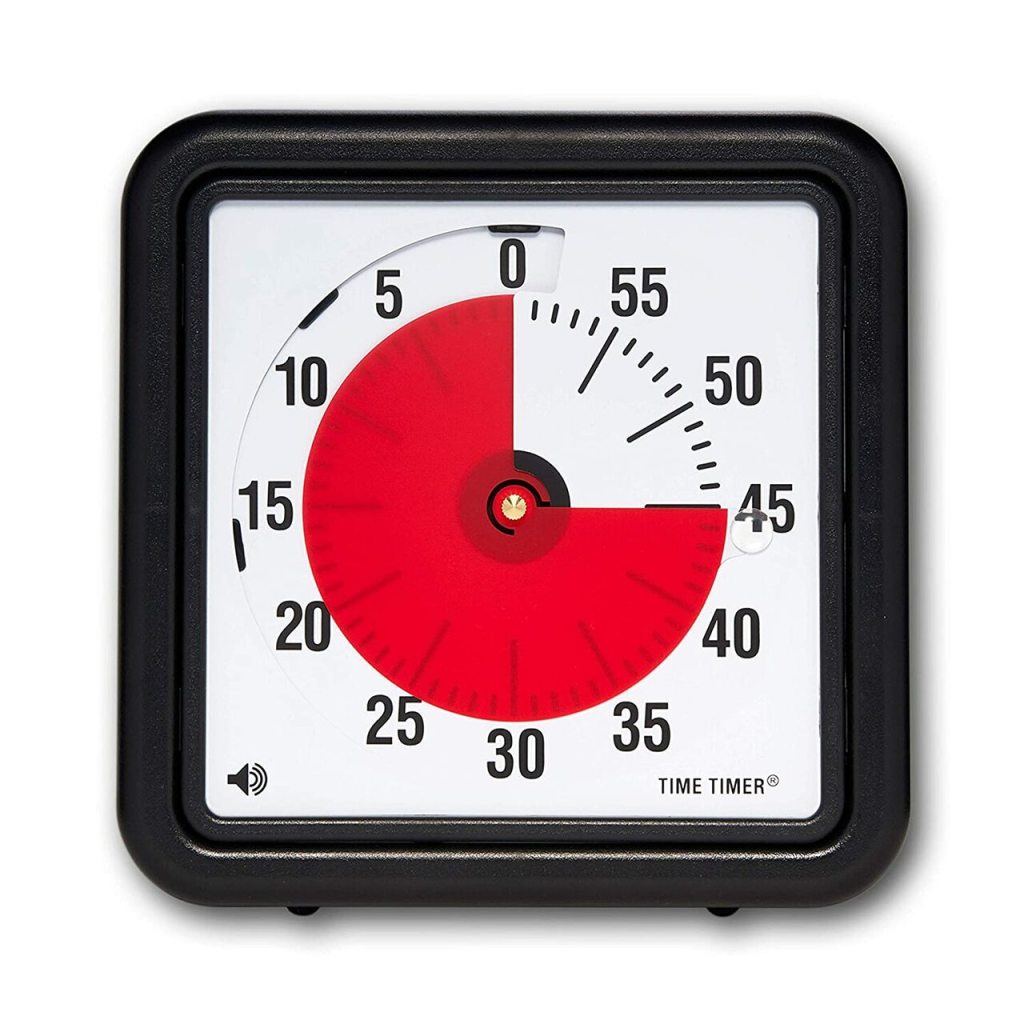
- Visual Timers
- Teach students to look at the timer to see how much time remains
Have students time themselves doing tasks to gain a sense of how long it will take them to do things.
 Executive Function